← Back to all instruments
Riqq
رق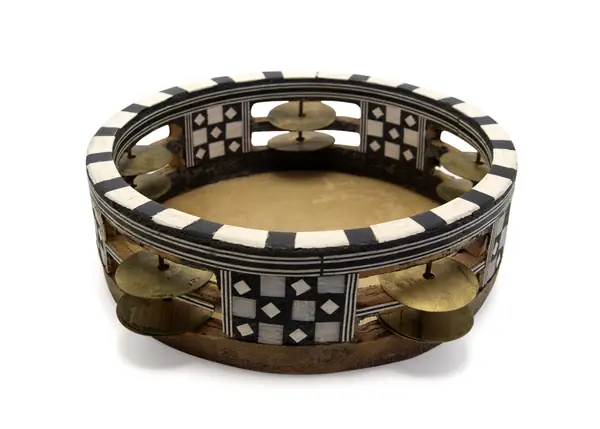
Far more than a simple tambourine, the riqq is the timekeeper and dynamic architect of classical Arabic music. Measuring roughly 20–25 cm in diameter with a fish-skin, goat-skin, or modern synthetic head and ten pairs of heavy brass jingles (sunuj), the riqq commands a vast sonic palette. Players alternate between open 'dum' strokes, crisp rim 'tak' strokes, shaken rolls, and muted cymbal articulations to ornament complex rhythmic cycles (iqa'at).
Acoustic & Musical Features
- Five double slots of brass cymbals producing crisp metallic articulations
- Distinct 'dum' (resonant center) and 'tak' (rim/jingle) timbral contrast
- Sophisticated finger-roll techniques capable of whisper-quiet to orchestral volume
Ensemble Role & Rhythms
- Sama'i Thaqil (10/8), Muwashshah cycles (Awfar, Murabba, Mudawwar), Maqsoum (4/4), Wahda
- Primary percussion timekeeper in the classical takht; cues tempo shifts and dynamic swells in Tarab orchestras