← Back to all instruments
Nay
ناي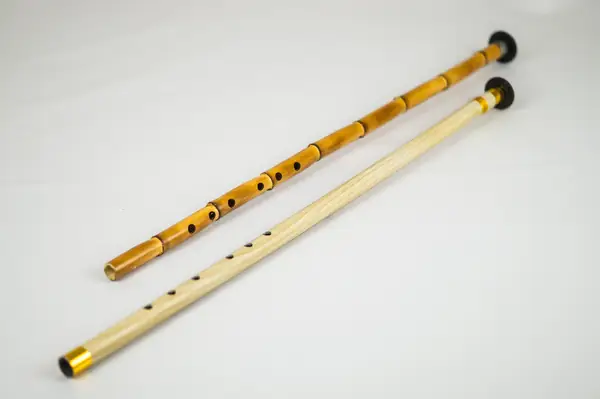
Fashioned from a hollow cylinder of giant reed (Arundo donax) with six finger holes in front and one thumb hole in back, the nay is one of the oldest continuously played instruments in the Middle East. By varying breath pressure and the angle of the lips against the sharp rim, a master nayati can bend pitches microtonally and leap across three octaves. Because a single nay cannot play easily in every key, professional players keep a set of seven or more nays of graduated lengths.
Acoustic & Musical Features
- Intimate, breathy lower register and plaintive upper register
- Microtonal pitch bending achieved through embouchure and half-holing
- Deeply associated with pastoral nostalgia and Sufi spiritual contemplation
Ensemble Role & Rhythms
- Rubato vocal preludes (layali), solo taqasim, and pastoral mawwal dialogues
- Sama'i and Sufi dhikr/madeeh liturgies
- Expressive wind lead in the takht; provides poignant counter-melodies to the lead vocalist