← Back to all instruments
Darbuka (Tabla / Derbakeh)
دربكة / طبلة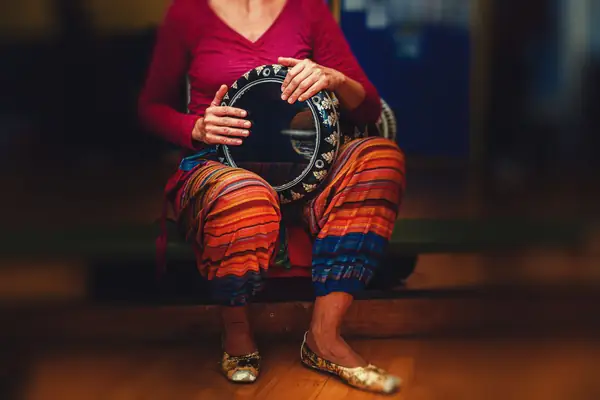
Known as the tabla in Egypt, derbakeh in the Levant, and darbuka across North Africa and the wider world, this goblet-shaped drum keeps the beat in popular, folk, and dance music in the Arab world. Traditionally made of clay with a stretched fish or goat skin—and today often cast in aluminum or fiberglass with tunable synthetic heads—the darbuka produces a booming central bass ('dum') and piercing, high-tension edge strokes ('tak' and 'ka') played with rapid split-finger techniques.
Acoustic & Musical Features
- Sharp timbral separation between deep center 'dum' and bright rim 'tak/ka' strokes
- Finger-roll ('farfara') and slap ('sak') articulations
- Central solo instrument in Raqs Sharqi (belly dance) drum solos
Ensemble Role & Rhythms
- Maqsoum (4/4), Baladi (4/4), Sa'idi (4/4), Malfuf (2/4), Ayoub (2/4), Chobi, Dabke
- Lead rhythmic driver in Baladi, Raqs Sharqi, Shaabi, Levantine Dabke, and modern Arabic pop ensembles