← Back to all instruments
Oud
عود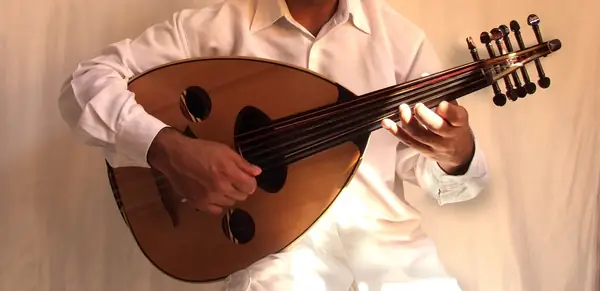
The oud (al-ʿūd, literally 'the wood') is the central melodic and theoretical instrument of Arabic music. Because its fingerboard is fretless, the player can articulate the subtle microtonal intervals (quarter-tones and comma inflections) essential to Arabic maqamat. Usually strung with five or six double courses of strings (plus a low single bass string) and plucked with a flexible plectrum (risha), the oud excels both at intimate solo modal improvisations (taqasim) and anchoring classical takht as well as modern ensembles.
Acoustic & Musical Features
- Fretless fingerboard enabling fluid microtonal intonation and expressive slides
- Warm, resonant woody timbre produced by a vaulted stave-ribbed bowl
- Vocabulary of plectrum (risha) tremolos, ornaments, and drone strokes
Ensemble Role & Rhythms
- Principal melodic lead, heterophonic vocal shadow, and harmonic/modal anchor in both chamber takht and orchestral firqa ensembles
- Free-meter solo taqasim (modal improvisation)
- Sama'i, Longa, Muwashshah, and Dawr accompaniment